
Bedford Township Previous Residents Sources
The most dependable backward trail separates ownership from household presence. Start with a current parcel record, because the Register of Deeds cannot search ownership by street address. The parcel supplies a current owner, situs address, and legal description that can be carried into the deed index. Historical directories, census schedules, newspapers, and permits then add context for past residents without being treated as interchangeable proof.
| Source | Years It Covers | Where Held | What It Shows |
|---|---|---|---|
| Register of Deeds online name index | Names from 1981; records described from 1976 | Monroe County Register of Deeds, Fidlar, Laredo, or Tapestry | Recorded grantors, grantees, and instrument trail |
| Older deed books and land records | County holdings from 1820; GSMC index for Deed Books M-S, 1833-36 | Register of Deeds, GSMC, and county genealogy sources | Legal descriptions, parties, and earlier transfers |
| Monroe and rural directories | 1892-93, 1896-97, 1913-14, and 1916-21 | MCLS, GSMC, and Library of Michigan collections | Names, addresses or routes, and household context |
| Bedford federal census material | 1880, 1900, 1910, 1920, and 1930 locally documented | GSMC, MCLS, and federal databases | Household composition, age, neighbors, and stated trade |
| Building records | Online retention start not located | Bedford Township Building Department | Permit, inspection, certificate, and work-date evidence when released |
For recent transfers, begin with the parcel and recorded deed. For an early farm or rural route, begin with the legal description, old plat, and land indexes. For a former household, use the directory and census layers after the land chain is placed in order. Those choices make a previous-residents search more reliable than a name-only search.
Bedford Township Previous Residents by Era
The current parcel is the bridge between a familiar address and older record systems. Bedford Township Assessing links to BS&A municipality 328, whose modules advertise name, parcel, address, sale, tax, utility, building, and assessing searches. Exact live fields vary by module. The Monroe County Parcel Viewer adds the map view, parcel geometry, ZIP, SBL, and assessment-linked attributes. Save the situs address separately from the owner mailing address. Neither field proves who occupied the parcel.
Record the parcel or SBL, legal description, current assessment year, current owner name, and likely acquisition period. The county deed FAQ directs users to this route because the recorder cannot perform ownership searches by street address. Once the parcel information is in hand, search the person who acquired the property by name and approximate year. The parcel is the key that prevents a street label from being mistaken for a legal land identifier.
For a thorough current address capture, the Bedford Township street directory process explains the assessor and GIS chain. Here, use that chain only as the first step toward older records, not as a claim that the assessment card lists every person who lived there.
Tracing Bedford Township Previous Owners
A deed chain follows recorded transfers backward. In this context, a party can be a person, an estate, a trust, a business, or several co-owners. Read each instrument as an event with parties, a recording date, a legal description, and references to earlier records. A mortgage, release, lien, plat, or land contract may explain a name in the index without being a sale. Keep the deed image or official copy with the index citation whenever the legal description matters.
- Open the Bedford assessment or GIS record and copy the parcel identifier, current owner, legal description, and likely acquisition year.
- Use the Monroe County Deeds Search options to find the current owner as grantee around that year.
- Record the grantor, grantee, recording date, instrument number or book and page, legal description, and cited prior instrument.
- Search the seller as a grantee in an earlier period, then repeat the same capture for each earlier transfer.
- When the web index stops, move to deed books, microfilm, county staff, the 1876 plat, and GSMC land indexes rather than guessing from the street number.
- Grantor and grantee
- The grantor transfers an interest in property. The grantee receives that interest in the recorded instrument.
- Chain of title
- The ordered sequence of recorded transfers and related instruments tied to the same land.
- Legal description
- The lot, block, subdivision, metes-and-bounds, or other land description that identifies property beyond a postal street address.
Fidlar Direct Search is the county's free route. Laredo offers remote or in-office access, and Tapestry is the general-public party-name route. The county lists Tapestry at $8.75 at inspection, with $8.95 announced for July 1, 2026, plus $1 per image. In-office print-only copies are listed at $1 per page. Index access does not mean every image is free.
Bedford Township Previous Records Limits
The online coverage distinction matters. Monroe County describes recorded land records from 1976, while the name index begins January 1, 1981. A search that fails online may therefore be a coverage issue, not evidence that the transfer never occurred. Older continuity depends on deed books, plats, microfilm, local history shelves, county staff, and the Society's early land holdings.
Use each service for its documented role. Fidlar offers free direct index search. Tapestry offers paid party-name and image access. Laredo is a separate remote or in-office option. At the counter, ask for the grantor or grantee name, approximate year, and legal description, not simply an old house number. The Register of Deeds records land documents; it is not a complete occupancy archive.
Note: A gap in the online index should trigger an office, microfilm, or library search, not a conclusion that there were no earlier owners.
Bedford Township Previous Address Names
Legal continuity and postal continuity are different. Bedford's history records West Erie as an early identity. West Erie Post Office began in 1834 and was renamed Lambertville on January 15, 1836. Samaria was formerly Weeksville, and Bedford Center became Temperance after a post-office change in 1884. A family can therefore appear under different postal labels without proving a move to a different parcel.
No official source located a complete street-renumbering or street-renaming schedule for modern Bedford. Do not force an old number to match a current number. Compare the old plat, directory wording, tax or deed legal description, nearby roads, and modern GIS. Preserve the exact place name and route from each source. That record of uncertainty is stronger than a neat but unsupported address match.
The historical detail is useful because Bedford Township was organized in 1836 after being part of Erie Township. Earlier county material may be cataloged under Erie or a broader jurisdiction. Search the place names individually when tracing past residents from the first decades of settlement.
Bedford Township Previous Parcel Maps
The 1876 Bedford Township plat is the strongest verified historical map bridge for an early parcel. It can connect landowners, roads, lots, and legal descriptions to the records that predate a modern street pattern. The 1901 Monroe County cadastral map adds landowner and road context. Neither map is a present occupancy list, but both can test whether a deed description and a historic route describe the same land.
The GSMC Bedford holdings record shows the plat, census, directory, and land sources that support this map-to-record comparison.
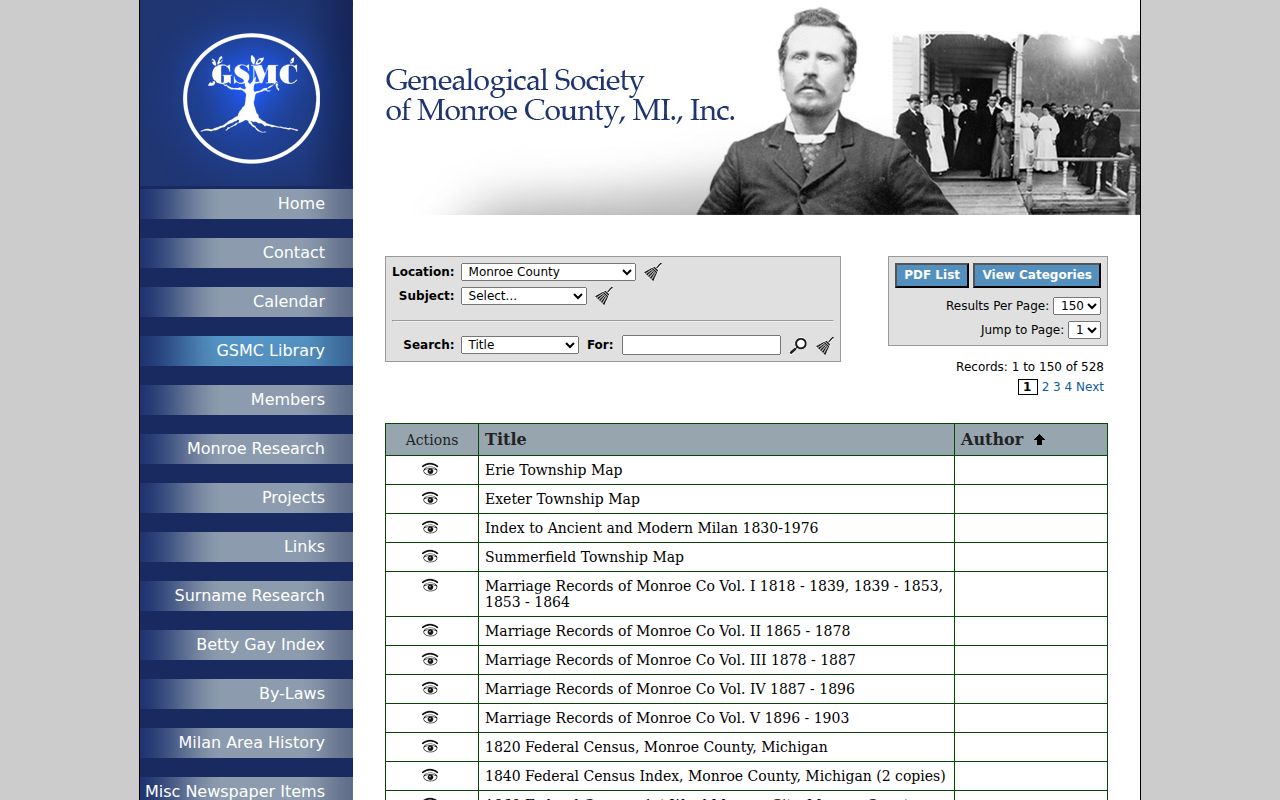
The listed materials support a careful trail from a legal description to a named household source. No verified Sanborn fire-insurance-map run was found for Bedford Township, Temperance, Lambertville, or Samaria, so the 1876 plat and 1901 cadastral map are the documented substitutes.
Bedford Township Past Household Evidence
Owners are only one layer of a house history. A criss-cross directory can arrange streets and house numbers, often showing a head of household, phone number, published occupancy notation, year first listed, and relocations. Name listings may add spouse or widow notation, address, and trade. The documented Monroe volumes span 1892-93, 1896-97, and 1913-14, while the Rural Directory of Monroe County covers 1916-21. Their inclusion of a Bedford household must still be verified volume by volume.
- Locate the address, route, or household in the closest available directory and copy its title, year, page, spelling, and marks.
- Read the corresponding street or criss-cross entry when the volume has one, without assuming it reflects current ownership.
- Compare the next available directory year and record changes in address, spouse notation, route, or nearby surnames.
- Pair the directory period with Bedford census material for 1880, 1900, 1910, 1920, or 1930 to check the household composition.
- Use a newspaper, obituary, probate file, or later deed to test a specific disappearance, death, estate, or transfer.
For county index coverage and local genealogy rules, the Monroe County Genealogy Research page is a useful official route.
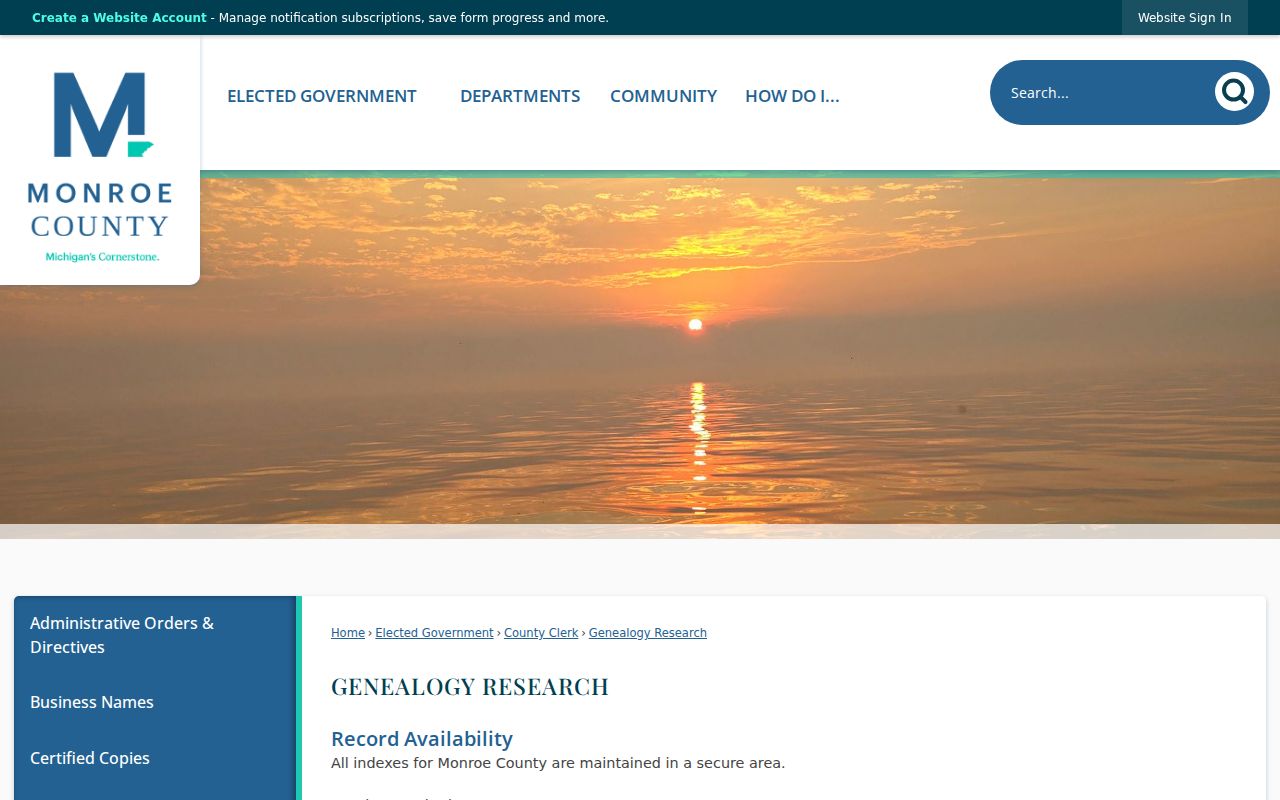
The county resource complements, but does not replace, the MCLS and GSMC directory shelves. The Museum Archives are closed for construction in 2026 and its obituary research service is unavailable, so use MCLS microfilm, the digital newspaper archive, reference staff, and future reopening updates as the practical fallback chain.
Bedford Township Past Resident Requests
Some address history is not online. Bedford's Building Department documents permit applications, plan review, inspections, and certificates of occupancy or compliance, but its official site does not provide a public searchable permit-case index. Request a specific address and date range from the department, or use the township's Michigan FOIA process for public records that are not posted. Describe the parcel, former postal name, cross street, approximate period, and record type. Expect redactions where a record contains protected information.
Obituaries and probate records can close a trail when a prior owner died or an estate transferred property. The obituary collection is described as indexed for more than 100,000 Monroe County residents from the early 1830s to the present, but current Museum access is interrupted. Probate may identify an estate representative, heirs, or property context, while a later recorded deed can confirm disposition. Treat these as separate records, not a single combined answer.
Lawful use. Use Bedford Township house-history and family-history records for lawful personal research. Do not use public details to track, harass, or harm a living person.
When a request is denied or a source is unclear, use the township's FOIA instructions and retain the response with the rest of the research log. A documented limit is more useful than an invented answer about who lived here before.